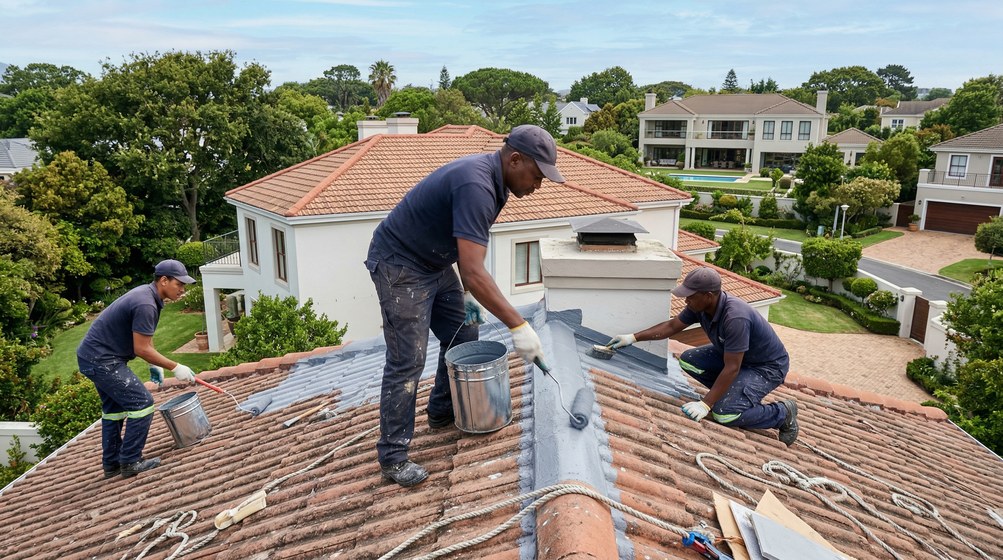
- Get a quote from 5-Star reviewed Green Point waterproofing specialists
- Flat roofs, parapets and walls protected against Green Point winter rain
- Correct diagnosis first - treat the cause, not the symptom
Why Waterproofing Is Non-Negotiable in the Western Cape
- Green Point receives significant Green Point winter rainfall - homes without proper waterproofing are vulnerable to water ingress on every wet day
- The thermal movement of buildings (expanding and contracting with temperature changes) creates hairline cracks that allow water entry
- Moisture through winter is particularly aggressive - it carries dissolved minerals that expand inside cracks and accelerate structural damage
- Flat roofs and parapets - extremely common in the surrounding suburbs - are the highest-risk areas for water ingress without proper waterproofing
- Water damage is progressive and silent - by the time you see a damp patch or peeling paint, water has usually been present for months or years
- Mould and mildew caused by water ingress are serious health hazards, especially for children and anyone with respiratory conditions
- A waterproofed home is a better-insulated home - moisture in walls significantly reduces thermal insulation value
Warning Signs That Your Home Needs Waterproofing
- Damp patches appearing on interior walls or ceilings, especially after rain
- Paint that is bubbling, peeling, or lifting from the surface
- White crystalline deposits (efflorescence) on exterior walls - a sure sign of water movement through masonry
- A musty or earthy smell inside the home - the smell of mould and mildew behind walls
- Cracks in walls or parapets that let light through or that have water staining around them
- Rust staining on walls around window and door frames - water is entering through the frames
- Discoloration or tidal marks on external walls showing water has run down the surface repeatedly
Our Waterproofing Process - Thorough and Long-Lasting
- Step 1 - Detailed assessment: We inspect all potentially affected areas including roofs, parapets, external walls, balconies, window heads and sills, and basement or ground-level walls
- Step 2 - Identify water pathways: We trace exactly where water is entering and how it is travelling - this is critical to treating the right locations effectively
- Step 3 - Surface preparation: We clean all surfaces to be waterproofed, remove loose material, treat biological growth, and allow surfaces to dry thoroughly
- Step 4 - Crack and joint treatment: We open cracks slightly, clean them out, and fill with flexible polyurethane or acrylic sealant that can move with the building
- Step 5 - Primer application: We apply a penetrating or bonding primer appropriate for the surface type and the waterproofing system being used
- Step 6 - Waterproofing membrane: We apply 2 to 3 coats of the specified waterproofing membrane - acrylic elastomeric, polyurethane, or cementitious depending on the application
- Step 7 - Flood testing or rain check: Where possible, we test the treated area with water or monitor after the next rain event to confirm effectiveness
Waterproofing Tips for Green Point Buildings
- Check the fall on flat slabs. If water is still standing a day after rain, the ponding will find a lap joint eventually - no membrane survives permanent immersion it was not designed for
- Treat rust staining or spalling on a balcony soffit as structural. Chloride attack on the reinforcing has to be repaired and cured before any membrane is laid over it
- Inspect perimeter upstands and parapets first. Exposed torch-on in Green Point goes brittle under UV and splits at the detail long before the field of the roof fails
- Use flexible systems. Rigid products crack as the slab moves, and coastal buildings move more than most through the temperature swings here
- Lift planters, aircon plant and furniture off the membrane onto a protection layer - point loads on a podium slab are a very common cause of failure
- Clear outlets before winter. Undersized or blocked drains back water up over the upstand height during a north-westerly front
- Never waterproof a wet substrate. Fix the source, let it dry, then coat - adhesion onto damp concrete will fail within a season
Waterproofing Green Point's Flat Roofs and Balconies
Green Point's roof profile is unusual for Cape Town. Because so much of the suburb is sectional title, the dominant roof type is not tile or IBR - it is flat or shallow-fall concrete slab, often with a torch-on membrane laid decades ago and patched repeatedly since. These slabs also double as balcony and podium surfaces, which means they take foot traffic, planter boxes, air conditioning plant and furniture on top of a waterproofing layer that was never designed for it.
Two failure patterns dominate. The first is ponding: flat slabs that have lost their fall, so water stands for days after a winter front instead of draining. Standing water finds every lap joint and every upstand eventually. The second is UV degradation of exposed torch-on, which goes brittle, shrinks and splits at the perimeter upstands - usually the first place a leak appears in the top-floor unit below.
Salt exposure adds a third problem specific to seafront blocks. Chlorides penetrating cracked concrete attack the reinforcing steel inside the slab. The rust expands, spalls the concrete off, and you get a structural repair rather than a waterproofing one. When we see rust staining or exposed rebar on a Green Point balcony soffit, the concrete repair has to be done and cured before any membrane goes down, or the new system will fail from beneath within a couple of seasons.
What We Look for on a Green Point Roof Inspection
- Ponding water still standing on the slab more than a day after rain
- Blistering, cracking or shrinkage at parapet and upstand details on exposed torch-on
- Rust staining or spalling concrete on balcony soffits and slab edges - a structural issue, not just a coating one
- Damp patches on the top-floor ceilings below a podium or communal roof area
- Planters, plant rooms or aircon units sitting directly on membrane with no protection layer
- Blocked or undersized outlets that back water up over the upstand height during a heavy front
What Makes Our Waterproofing Service Different
- We diagnose correctly first - treating the symptom without finding the source of the water is a waste of money
- We use flexible, crack-bridging waterproofing systems from leading brands including Chryso, Sika, Mapei, and local SA manufacturers
- We waterproof flat roofs, parapets, walls, balconies, basements, wet areas, and retaining walls
- All waterproofing work comes with a written workmanship guarantee
- We can also paint over the waterproofed surface for a finished, attractive appearance
Our Commitment - What You Always Get
- Free on-site assessment and detailed quote
- Full surface preparation
- Premium quality materials only
- Final walkthrough with client
- Complete clean-up included
- 100% satisfaction guaranteed
Waterproofing Questions from Our Clients
Waterproofing Services Across Green Point
Water damage is a particular concern in Green Point where moisture, Green Point winter rainfall, and the thermal movement of buildings all combine to test waterproofing systems relentlessly. Painters Green Point provides professional waterproofing services throughout Green Point and surrounding areas, and surrounding areas. Our local knowledge means we understand exactly what conditions each area faces and which products and systems perform best here.
Do not wait for water damage to force your hand. Contact Painters Green Point today for a free waterproofing assessment - we identify problems early and fix them properly before they become expensive disasters.
Get a Free Quotewaterproofing Green Point, flat roof waterproofing Green Point, damp proofing Green Point, waterproof membrane surrounding suburbs, parapet waterproofing, water damage prevention, wet room waterproofing, elastomeric waterproofing Green Point
5-Star Reviews
Powered by leaderr