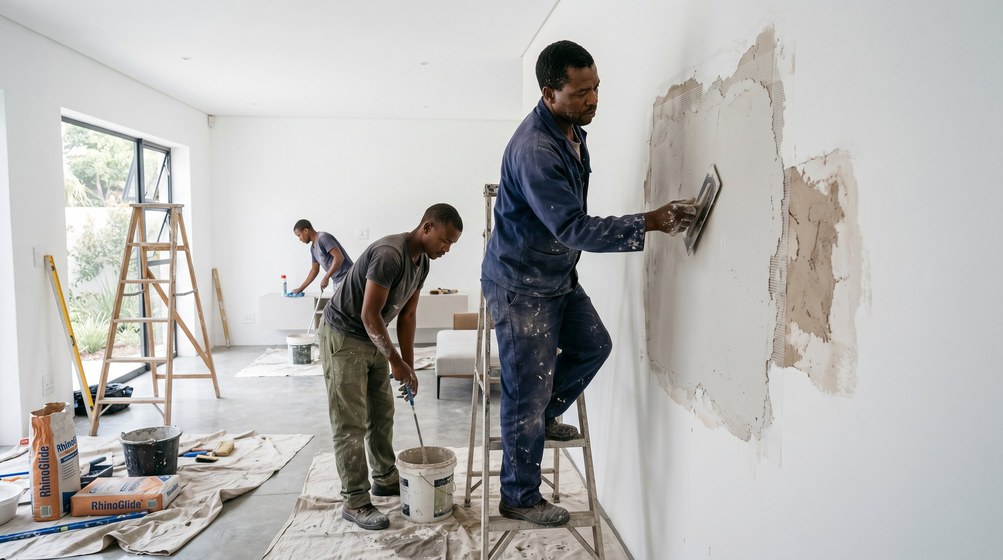
- Get a quote from 5-Star reviewed Green Point plaster repair specialists
- Subtropical conditions and older homes create plaster maintenance needs
- Skim coat, crack repair and full replaster for all surface types
Why Plaster Repairs Must Always Be Done Before Painting
Paint is a film a fraction of a millimetre thick. It has no structural capacity whatsoever, and it cannot hold together plaster that has already let go. Coating over failed plaster hides the problem for a season and then fails with the substrate, taking the cost of the repaint with it.
In Green Point there is a specific reason plaster fails, and it is usually not age. It is salt. Chlorides carried in from the Atlantic penetrate the plaster, crystallise within it as it dries, and the expansion of those crystals pushes the plaster off the wall from the inside. That is why so much local plaster failure appears as blown, hollow-sounding patches rather than simple cracks.
The second cause is corrosion. Steel lintels above windows and reinforcing in concrete elements rust, expand, and crack the plaster around them. The crack is the symptom; filling it without treating the steel means it reopens in the same place within a year or two.
Signs Your Walls Need Plaster Repairs Before Painting
- Hollow sound when tapped - the plaster has debonded from the substrate even where the surface looks intact
- Blown or bulging patches with white salt bloom, the classic coastal failure
- Horizontal cracks above windows and doors, usually a corroding lintel expanding inside the wall
- Diagonal cracks from window and door corners, which indicate movement rather than surface damage
- Crumbling plaster around a tide mark low on the wall - rising damp in older stock with a failed damp proof course
- Spalling concrete with exposed reinforcing on balcony edges and soffits - a structural repair, not a plaster one
- Previous filler that has cracked or shrunk back, indicating the underlying cause was never addressed
How We Repair Your Plaster - Properly, Not Quickly
- Sound the wall by hand to map the full extent of debonding, which is nearly always larger than the visible damage
- Identify the cause before repairing - salt, corrosion, movement or damp all need different treatment
- Cut back to sound, well-adhered plaster with a clean square edge rather than feathering into loose material
- Where the cause is a corroding lintel or reinforcing, expose the steel, treat it and prime it before any plaster goes back
- Salt-contaminated substrates washed and, where necessary, treated with a salt-inhibiting render before making good
- Match the repair to the existing wall - lime plaster on older buildings, cement render where that is what is there. Cement patching into lime plaster fails at the join every time
- Build up in correct thicknesses and let each layer cure. Rushing this causes shrinkage cracking straight through the new work
- Cure fully before painting. New plaster is highly alkaline and needs an alkali-resistant primer or a curing period, or the coating will burn and discolour
Plaster Repair Tips from Our Experienced Team
- Tap the wall before you paint. Hollow areas will fail regardless of how good the coating is
- Never patch over a rusting lintel. The crack will reopen in the same line within a year or two
- Match like with like. Hard cement patches in soft lime plaster crack around the perimeter as the two move differently
- Let new plaster cure properly and prime it with an alkali-resistant primer, or the fresh alkalinity will attack the paint film
- Treat the moisture source first. Repairing plaster on a wall that is still wet is money spent twice
- Expect coastal repairs to be larger than they look. Salt damage spreads well beyond the visibly blown patch
- On a building over 60 years old, check whether heritage consent applies before altering anything beyond like-for-like repair
Why Our Plaster Repairs Last So Much Longer
- We diagnose the cause rather than filling the symptom
- Full sounding of the wall so the repair covers the actual extent of the failure
- Steel treated and primed before plaster goes back over it
- Correct materials matched to the existing substrate, including lime on heritage-age stock
- Proper curing time before priming and painting
- Honest referral where the issue is structural - spalling concrete and exposed reinforcing need an engineer's input, not a plasterer's
Our Commitment - What You Always Get
- Free on-site assessment and detailed quote
- Full surface preparation
- Premium quality materials only
- Final walkthrough with client
- Complete clean-up included
- 100% satisfaction guaranteed
Plaster Repair Questions From Our Clients
Serving Green Point
Plaster repairs are a part of almost every painting project we do across Green Point. The thermal movement that buildings experience in Green Point - expanding in the hot dry summers and contracting in the cold wet winters - creates hairline cracks over time in even the best-built homes. In Green Point, the winter damp also plays a role in plaster degradation. Our experienced team repairs plaster damage of all types and scales - from tiny hairline cracks to full wall re-plastering - before delivering a flawlessly smooth painted finish.
Smooth perfect walls and flawless paint - that is what you always get when Painters Green Point does your plaster repairs before painting.
Get a Free Quoteplaster repairs Green Point, crack filling walls, wall repair painting, plaster patching, interior wall repair, exterior plaster repair, skim coat Green Point, plaster restoratiin Green Point
5-Star Reviews
Powered by leaderr